Youthup Wire

Grab the latest from this knowlegde platform

Internal Audit Manager – Trans Business for Trading and Distribution

Click here to ApplyInternal Audit Manager – Trans Business for Trading and Distribution The Internal Audit Manager Performs and controls the full internal audit cycle including risk management and control management over operations’ effectiveness, financial reliability, and compliance with all applicable directives and regulations. The internal audit activities are performed over all assigned regions and branches.Accountability includes: Establish standards and implement audit procedures to ensure that the compliance rules throughout the company and its branches are effective and efficient in identifying, preventing, detecting, and correcting noncompliance. Review the internal control framework and consistently ensure its compliance. Evaluate adherence to the company’s policies and procedures affecting key business processes (e.g., sales cycle, supply chain, finance, Fleet). Establish audit procedures, develop criteria, review and analyze evidence, and document processes and procedures. Coordinate and liaise with the external auditors (i.e., BDO) to ensure external audits and financial reporting processes are efficient and effective. This duty takes place through close coordination and collaboration of audit-related activities. Produce reports on verifying the reliability and validity of information and operational/accounting systems. Develop and design processes for improvement initiatives, in which the IAM should build and demonstrate the commitment to continuous improvement. Ensures on-going improvement and implementation of best practice audit processes and strategies appropriate to TEIE/TBTD’s environment. Perform an on-going update to the finance department’s operating manual (i.e., SAP-Blueprint). PS: the internal audit manager will report to the Head of the finance department Job Details Posted Date: 2020-06-15 Job Role: Accounting and Auditing Company Industry: Tobacco Products Manufacture Preferred Candidate Career Level: Management Click here to Apply

Internal Audit Manager – Trans Business for Trading and Distribution Read More »

Full Stack Web Developer – Laravel at Prudential Estates Investors Network Limited

Click here to ApplyFull Stack Web Developer – Laravel at Prudential Estates Investors Network Limited Prudential Estates Investors Network Limited is recruiting to fill the position of: Full Stack Web Developer – Laravel. The position is located in Lagos State. Interested candidates should possess relevant qualification. Click here to Apply

Full Stack Web Developer – Laravel at Prudential Estates Investors Network Limited Read More »

Physics and Additional Maths Teacher at Noble Hall Leadership Academy for Girls

Click here to ApplyPhysics and Additional Maths Teacher at Noble Hall Leadership Academy for Girls Noble Hall Leadership Academy for Girls is recruiting to fill the position of: Physics and Additional Maths Teacher. The position is located in Abuja. Interested candidates should possess relevant qualifications. Click here to Apply

Physics and Additional Maths Teacher at Noble Hall Leadership Academy for Girls Read More »

Channel Partnership Manager at Smart Partners Consulting Limited

Click here to ApplyChannel Partnership Manager at Smart Partners Consulting Limited Smart Partners Consulting Limited is recruiting to fill the position of: Channel Partnership Manager. The position is located in Lagos, State. Interested candidates should possess a Bachelor’s or Master’s degree in Business, Marketing, or a technical discipline with at least 5 years of work experience. Click here to Apply

Channel Partnership Manager at Smart Partners Consulting Limited Read More »

How-To Content Isn’t Going Anywhere (and What That Means for Your Strategy)

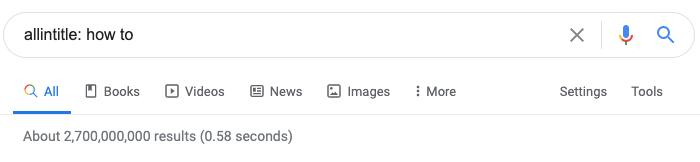
Posted by amandamilligan I’m a big fan of the Lore podcast, and in a recent episode, the host discussed a book called the Malleus Maleficarum. Two words starting with the “mal” prefix doesn’t sound super friendly, right? Well, the book is essentially a guide on how to identify witches and conduct witch trials. It turned out to have quite the horrible impact on society — as we’ve learned in history classes — but the host notes that it’s also one of the first how-tos ever written. And it was published in 1486, more than 500 years ago. How-to content isn’t new, and from what I can tell, it isn’t going anywhere. Look at how many search results come back when you narrow content down to titles including “how to.”  It’s not just that there’s a ton of this type of content, either. People want to read it. The prominence of “how-to” content My team at Fractl did a study about how different generations search online. We gave nearly 1,000 people this prompt: You just got engaged! It’s time to start thinking about the wedding, but you’re not sure where to start. What is the first word or phrase you would search using Google or another search engine? Thirteen percent of all the respondents’ hypothetical searches had “how to” in them, and the youngest respondents — millennials and Gen Zers — used it the most. It serves as additional proof for what we already suspected: how-to content remains a staple in the content world. And it makes sense, doesn’t it? How-tos not only lend themselves to the thrill of learning new information online (and the seemingly endless number of things that are available to learn); they also serve as a tool of empowerment. Even if you don’t know how to do something, you can figure it out just by going online and reading/watching/listening to content someone else put together for you. If people continue to desire this type of content, how can you make sure you’re incorporating it into your content plans accordingly? Finding how-to opportunities In some cases, it’s obvious how more how-to content can help your brand. Perhaps you’re a B2B SaaS company with a product designed to help teams collaborate online. You could write how-to articles about improving communication, transitioning to a new chat client, and plenty of other topics. It’s important to have these articles, because not only do they speak to a direct need of a certain audience, but they’re also directly related to your brand offering. They’re rife with more natural call-to-action opportunities, and they demonstrate your willingness to help solve a problem. This article by Brembo is a perfect illustration of this. After the helpful guide, they have a CTA to: “Just go to the configurator (www.moto.brembo.com) and enter some simple information about your motorcycle such as brand, engine displacement, model and year. The configurator will search through the entire Brembo line and quickly indicate which Brembo products are available for the selected bike, even including the pad compounds.” And voilà! You have a useful guide that ties directly into your product. However, the trick is making sure you’re seizing every opportunity and not settling on just the obvious how-tos. Here are some ways you can find creative new opportunities: Ask your audience. Run a poll on social media. Survey your email list. Call your customers. Whatever your preferred method, ask what they want to see! Get to know their challenges better so you can create content that will address them. Research what’s being asked online. You can start by going to Answer the Public or using BuzzSumo’s Questions tool. Both allow you to see what people are asking across the web regarding topics. But you can also look at similar content that exists and see what people are saying in the comments. Is there any confusion? Any points that still need to be covered? Talk to your sales team. They’re the ones “on the ground” discussing potential worries and concerns from your clients and customers. If you haven’t already, set up a regular check in with the sales department so you can stay updated on what questions are popping up that the marketing team can answer in its content. Additionally, for brands that might not have clear ideas for how-to content, it’s important to explore top-of-the-funnel opportunities, which you can do using the same tactics above. Top-of-the-funnel means that, while the how-to guides might not be directly related to your service offering, they’re still good for introducing your brand to people who are interested in your general industry. For example, like many other food brands, King Arthur’s Flour has recipes involving flour on their site. However, unlike many other food brands, their article, “How to make high-rising biscuits” has more than 94,000 engagements on Facebook, according to BuzzSumo. Now, this is arguably middle-of-the-funnel because you need flour to make the biscuits and it’s a flour company creating the content. But people looking this up probably already have flour in their homes. The benefit of creating this content is that now they’re familiar with this brand of flour, and if the recipe goes well, they have more trust in this particular brand. So, the article doesn’t have to be “how to choose the right type of flour.” It can be something your audience wants to know related to what you offer. Getting creative with how-to content Sometimes you want to create a guide that technically might already exist, but you want to do a better job in one way or another. That’s great! But it means going the extra mile, thinking outside the box, and every other cliche you can think of. And that doesn’t always mean doing something costly or extravagant. For example, because of the COVID-19 pandemic, the CDC released a piece about how to wash your hands correctly. Rather than sticking to the diagrams you see in restaurant bathrooms, they created a clean list of steps followed by a

How-To Content Isn’t Going Anywhere (and What That Means for Your Strategy) Read More »

What is LinkedIn Live? [+How to Leverage It in Your Marketing Strategy]

Every week, I use LinkedIn to talk about current events and connect with other content creators. And I’m not the only one. In fact, LinkedIn has had nearly 700 million active users in 2020 and has become one of the top social media platforms. In the last year, companies have started to use the social network’s new live-streaming technology. While Facebook and Instagram launched live streaming features in 2016, LinkedIn just recently decided to join the live streaming platforms. In February 2019, LinkedIn Live was launched to individual users. This year, it was announced that LinkedIn Live would also become available to business pages. With this announcement, LinkedIn decided “to bring you a tighter integration between LinkedIn Events and LinkedIn Live, by turning these two products into a new virtual events solution that enables you to stay connected to your communities and meet your customers wherever they are.” Live streaming continues to gain popularity among audiences. In fact, in 2019, internet users watched 1.1 billion hours of live video. Additionally, according to Go-Globe, by the end of 2020, live streaming is expected to account for 82% of all internet traffic. Plus, LinkedIn Live streams have increased by 158% since February 2020. Although LinkedIn Live isn’t available to all businesses right now, it might be time to start thinking about live streaming. To get started with LinkedIn Live, you can complete an application online to become a Live broadcaster. In this post, let’s review how you can leverage LinkedIn Live in your marketing strategy to attract new audiences. 1. Virtual Events With the recent integration of LinkedIn Live and LinkedIn Events, the social media platform is a great place to host your virtual events. LinkedIn virtual events allow you to meet your audience where they are and host your event in a trusted environment. Additionally, hosting a virtual event on LinkedIn Live will help you attract the right professional audience. You can share your events with your business page followers, plus you can send event invitations to your first-degree profile connections. Instead of taking videos during your virtual conference and posting them on LinkedIn later, LinkedIn Live allows you to connect with your audience in real-time. According to LinkedIn, LinkedIn Live is seeing 23 times more comments per host and six times more reactions per post than native video. With LinkedIn Live, you can engage and connect with your followers in real-time during your virtual events. 2. Recruiting LinkedIn is one of the main hubs for recruiters and job-seekers alike. In fact, recruiting is one of the top benefits of having a LinkedIn profile for individuals and brands. With LinkedIn Live, you can support your recruiting efforts by showing off your workplace culture, introducing team members, and answering questions from your audience. Additionally, you can host a live panel with employees on what it’s like to work for your company. Team members can discuss what their hiring journey looked like and give tips to people who want to work for your company one day. You can also host a Q&A with different people on your team to highlight their specific roles. For example, you can have them introduce themselves and their role, and then take questions about their day-to-day tasks and duties. If you want to use LinkedIn Live to support your recruiting efforts, think about other social media tactics you’ve implemented, and then strategize how those can convert into a live stream. 3. Thought Leadership One of the central LinkedIn strategies for most companies is to use the social media platform to position yourself as an industry leader. To do this with LinkedIn, you can discuss current events in your industry and boost your content creation strategy. Using LinkedIn Live, you can host a panel for industry thought leaders, including those at your company, to talk about industry trends and issues. Additionally, you can host a live stream dedicated to interviewing industry professionals and experts. Amplifying thought leaders and participating in industry discussions is a great way to use LinkedIn Live to attract new audiences. 4. Showcase Expertise Not to be redundant, but becoming an authority in your industry is an important part of your marketing strategy. LinkedIn Live presents an excellent opportunity to showcase your expertise. Using live streaming technology, you can share your tips and tricks with your audience. To do this, brainstorm how-to topics that your audience is interested in. If you’re struggling to come up with ideas, consider repurposing old content like blog posts or YouTube videos. Producing live streaming content will help you boost your content marketing strategy. 5. Announce a New Product or Partnership As a professional social media platform, LinkedIn is a great place to announce a new product or partnership. In fact, you might consider doing this on LinkedIn Live. You can bring on representatives from your company and partner company to discuss what the new partnership entails. This is also a great opportunity to educate and interact with your audience. By launching a product during a live stream, you can get immediate feedback from your audience, answer questions, and conduct a live demonstration. The announcement of LinkedIn Live proves that live streaming will continue to be an important tactic in your marketing strategy. In fact, this feature shows that consumers are interested in interacting with brands in real-time. If you’ve already used Facebook and Instagram Live, LinkedIn Live might be another platform to use and experiment with — especially if your audience is more likely to be on LinkedIn than other platforms. To learn more about how real brands are using LinkedIn Live, check out this blog post on LinkedIn Live examples.

What is LinkedIn Live? [+How to Leverage It in Your Marketing Strategy] Read More »

12 Reasons to Integrate Visual Content Into Your Marketing Campaigns [IG]

With some 1.7 billion websites worldwide, it’s fair to say the web of 2020 is a cluttered place. Plus, there are over 2 million new blog posts published daily. To help stand out from the crowd, it’s vital publishers create compelling and engaging content. But how do you go about creating attractive, engaging, and memorable content? The key is to make it visually appealing. The human brain processes visual content 60,000 times faster than text. That’s a huge disparity and goes a long way to explaining why images and videos are so key to driving engagement on social channels like Facebook, Instagram, Twitter, and LinkedIn. Simply put, visual elements are key for driving traffic and engagement across your sites and social channels. With all that said, what are the key visual elements you should be mindful of including in your content? Where do the opportunities lie and how can you engage your audience in the most meaningful ways? Fortunately, my team at Ever Increasing Circles has created the following infographic to explore key visual elements you should be mindful of including in your content — as well as where opportunities lie, and how you might engage your audience in more meaningful ways. Check it out, below.  

12 Reasons to Integrate Visual Content Into Your Marketing Campaigns [IG] Read More »

Managing a Franchise Network’s Social Media: Lessons Learned From Burger King

All franchise owners should have a social media plan in place for their franchisees to avoid potential online reputation management disasters, and to keep the brand voice consistent. In this post, we will break down what Burger King did to reach social media greatness, and see a crisis that occurred anyway. See the 7-step plan that can help you avoid social media problems in the future.

Managing a Franchise Network’s Social Media: Lessons Learned From Burger King Read More »